Legacy planning: Strategies for turning wealth into impact

Nerre Shuriah
JD, LLM, CM&AA, CBEC® | Senior Director of Wealth Content and Knowledge
You may have completed your foundational estate planning, such as implementing a trust or updating your beneficiary designations, but do these tasks truly capture who you are and what your life's achievements signify?

This is where legacy planning—the second level of wealth planning—can provide the clarity and purpose needed to address the bigger picture, particularly if you want to continue to impact your family, community and the causes you believe in after you pass away.
Key takeaways
- Legacy planning is the process of aligning your wealth with your values to create a lasting impact for the people and causes you care about.
- Use of tools like ethical wills alongside traditional estate planning vehicles, such as trusts, can help ensure your values and intentions are passed down along with your wealth.
- A coordinated team of financial and legal professionals can help bring your plan to life, introducing strategies to preserve wealth and extend your impact over time.
What's the difference between estate planning and legacy planning?
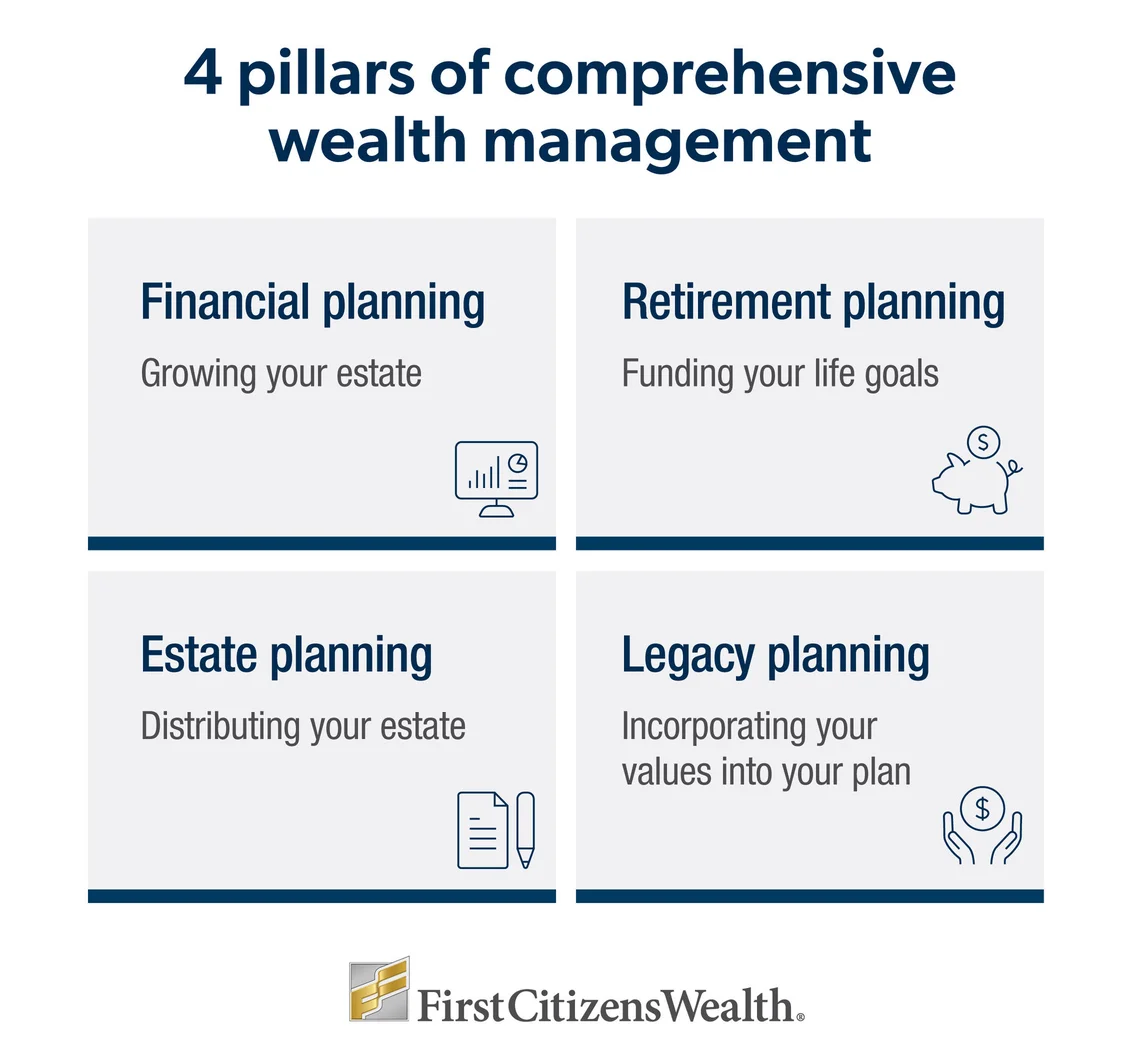
While estate planning and legacy planning are consecutive steps in the wealth planning process, they each serve a distinct purpose.
Estate planning focuses on organizing and preparing for the distribution of your assets and property after your passing. It centers on the legal and financial aspects of transferring wealth, with the goal of ensuring your assets are distributed according to your wishes while minimizing legal complications and financial burdens for your heirs.
Legacy planning strategies build on this foundation by incorporating your values and beliefs. With legacy planning, the emphasis is on the emotional, social and philanthropic aspects of your legacy to leave a meaningful and lasting impact that reflects your life’s purpose and values—not just your financial wealth.
Consider Dolly Parton, who established the Dollywood Foundation's Imagination Library to promote childhood literacy. Inspired by her father, who never learned to read or write, she launched the project in her home state of Tennessee. Since its founding, the organization has donated more than 200 million books to children around the world. "Before he passed away, my daddy told me the Imagination Library was probably the most important thing I had ever done," she has said.
Simply put, estate planning ensures your financial affairs are in order, while legacy planning helps ensure your values and intentions are carried forward. Your estate plan communicates where to distribute your wealth, while your legacy plan informs recipients what to do with the wealth.
Whether your goal is to support future generations of your family, give back to your local community or contribute to causes important to you, these steps can help guide your legacy planning approach.
1Complete your basic estate planning
Before engaging in legacy planning, you should have a basic estate plan in place. This includes a current will, power of attorney and advanced healthcare directive. Make sure your chosen executor or agent knows where to find these documents and how to contact your advisors. Having a basic estate plan and making the materials easily accessible can reduce stress for your heirs and may help streamline the probate process.
You should also confirm that the beneficiary designations, such as those named on your financial accounts and insurance policies, are up to date. These assets transfer directly to named beneficiaries outside of the probate process.
Once these foundational elements are in place, you can turn your focus to legacy planning, which is a more personalized process that begins with evaluating your goals, values and long-term intentions.
2Think through your vision
Take time to consider who or what you want your wealth to benefit. Start by reflecting on your values, beliefs and priorities, including any cultural or religious considerations. This may be a conversation you have with family members or a process you prefer to go through alone.
You might be drawn to specific causes—such as education, humanitarian efforts, animal welfare or climate change— or want to support specific organizations through pledges, endowments and other gifts.
For some, the focus is closer to home. Honing in on how to preserve wealth for future generations can be a central goal—often achieved by creating trusts designed to grow and protect assets over time.
3Create an ethical will
As you define your vision, it's equally important to document the values and experiences behind it. The priorities that shape your legacy often aren't things that will be captured in a legal will.
If your plan is designed to last for generations, your beneficiaries may want to understand who you were, what guided your decisions and the values you hoped to pass on.
An ethical will is one way to communicate this. It's a deeply personal document that shares your beliefs, life lessons, hopes and personal reflections with loved ones. Unlike a legal will, which focuses on the distribution of material assets, an ethical will conveys your values, experiences and emotional legacy. It can also include photographs, letters or videos to better communicate the sentiments you hold dear.
This can be especially meaningful in multigenerational wealth planning. By accompanying structures like a dynasty trust with an ethical will, you can help future generations understand the purpose of the wealth so they can continue to carry your values forward.
An ethical will, sometimes referred to as a letter of intent, isn't legally enforceable. However, it provides guidance to your executors and trustees when making decisions like distributions. It also helps guide your beneficiaries to utilize wealth according to the values you want to encourage.
For example, an entrepreneur might use an ethical will to encourage their children or grandchildren to invest in their future by starting their own business. In this context, their ethical will might read:
"Entrepreneurship shaped my life in ways I couldn't have predicted. It taught me resilience, independence and the importance of seeing something through, even when the outcome wasn't certain. If you choose to build something of your own, I hope you'll approach it with that same mindset. As part of my estate plan, I've allocated capital to support that step—not to remove the work required, but to give you a meaningful place to begin."
4Consider lifetime giving
Once you identify your priorities, you can decide whether to begin helping during your life or have all bequests occur at your passing. This doesn't have to be an all-or-nothing decision. In fact, many people choose a combination of lifetime giving and testamentary gifts.
Gifts to individuals
If you plan to make any gifts to individuals during your lifetime, it's helpful to be aware of applicable gifting rules. As of 2026, individual gifts have a few stipulations.
- You can gift a maximum of $19,000 annually to each recipient without tax consequences. If you exceed this amount, you must file a gift tax return. Gifts made directly to educational or medical institutions don't count against this annual maximum amount.
- The lifetime estate and gift tax maximum for an individual is $15 million.
Gifts to charities
If you plan to make gifts to charitable organizations during your life, you can also benefit from seeing the impact of your generosity. Whether you create an endowment, fund a scholarship or support the construction of a new building or development of a new college program, you can observe how the gift is managed and the difference it makes over time. This visibility can give you the flexibility to adjust your legacy plans as your priorities evolve.
Charitable giving can also offer tax advantages, although the rules are nuanced. While donations generally aren't subject to gift tax, the charitable deduction you may receive is subject to IRS limits based on factors like your income and tax bracket. The One Big Beautiful Bill Act has introduced changes to charitable giving rules that may affect how and when deductions can be applied. For this year's charitable giving limits, see our guide to annual IRS updates.
Qualified charitable distributions, or QCDs, are another way to incorporate charitable giving into your legacy plan. QCDs allow you to donate to charity directly from certain retirement accounts, with the distribution counting toward your required minimum distribution for the year. Because the funds are transferred directly to a qualified charity, the amount isn't included in your taxable income—which may help manage your overall tax exposure.
5Consider a charitable trust
Trusts can also be a powerful way to incorporate charitable giving into your legacy while still providing for your loved ones. Charitable trusts in particular allow you to balance both priorities: supporting a cause or organization while preserving benefits for your family.
There are two main types of charitable trusts.
- Charitable remainder trusts, or CRTs, provide income to you or your beneficiaries either for a set period or until you pass away. When the term ends, the remaining assets are distributed to your designated charity.
- Charitable lead trusts, or CLTs, provide income to a charity for a set period, after which the remaining assets pass to your beneficiaries.
As an added benefit, the use of charitable trusts may also help minimize income, gift and estate taxes—making them a powerful tool for achieving both philanthropic and personal goals.
6Explore wealth preservation strategies
Certain types of trusts can help guide how assets are managed, distributed and protected over time. They can be especially useful if you're concerned about how future beneficiaries may use inherited wealth or want to ensure it aligns with your personal values.
For example, trusts can be used to set rules around when and how heirs can access money, helping to ensure assets are used as you intended. Trusts can also incorporate limits and incentives to help prevent beneficiaries from becoming overly dependent on their inheritance funds.
For long-term wealth preservation, a dynasty trust such as a Delaware Trust is also worth considering. Designed for longevity, a dynasty trust can continue for many generations in certain jurisdictions where trust durations have been extended or eliminated—allowing assets to benefit your family for generations to come.
If you'd like to leave more to your heirs or charitable organization than your estate may support, life insurance may help bridge the gap. You can name a charity as a beneficiary of your policy, which may also reduce the potential for family disputes over assets with sentimental value.
7Let your advisors guide you through the process
Because pitfalls that may occur with any inheritance have less to do with estate planning details and more to do with the values you share through your legacy plan, it's critical to articulate your values clearly.
By working with an experienced legacy planning team, you can craft a plan that doesn't cause your wealth to undermine your loved ones' motivations and relationships as they receive their inheritance.
Letting your team of advisors guide you makes the process less overwhelming, helps manage emotions and allows for adjustments as your needs evolve. Your advisor team can create a structure and buffer that allows for more productive meetings with family members and other stakeholders as discussions continue and your goals progress.
The bottom line
A thoughtful legacy plan can help support the people and causes that matter most to you while giving your wealth purpose and meaning. With a strong financial foundation and the right guidance, you can create a comprehensive legacy plan that reflects your values and extends your impact well beyond a traditional estate plan.